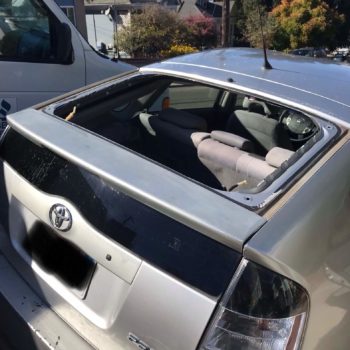
Hello, welcome to Auto Glass Repair San Francisco.

Yes, I realize this is quite a strange name for a website but there is a reason for deciding on this particular name.

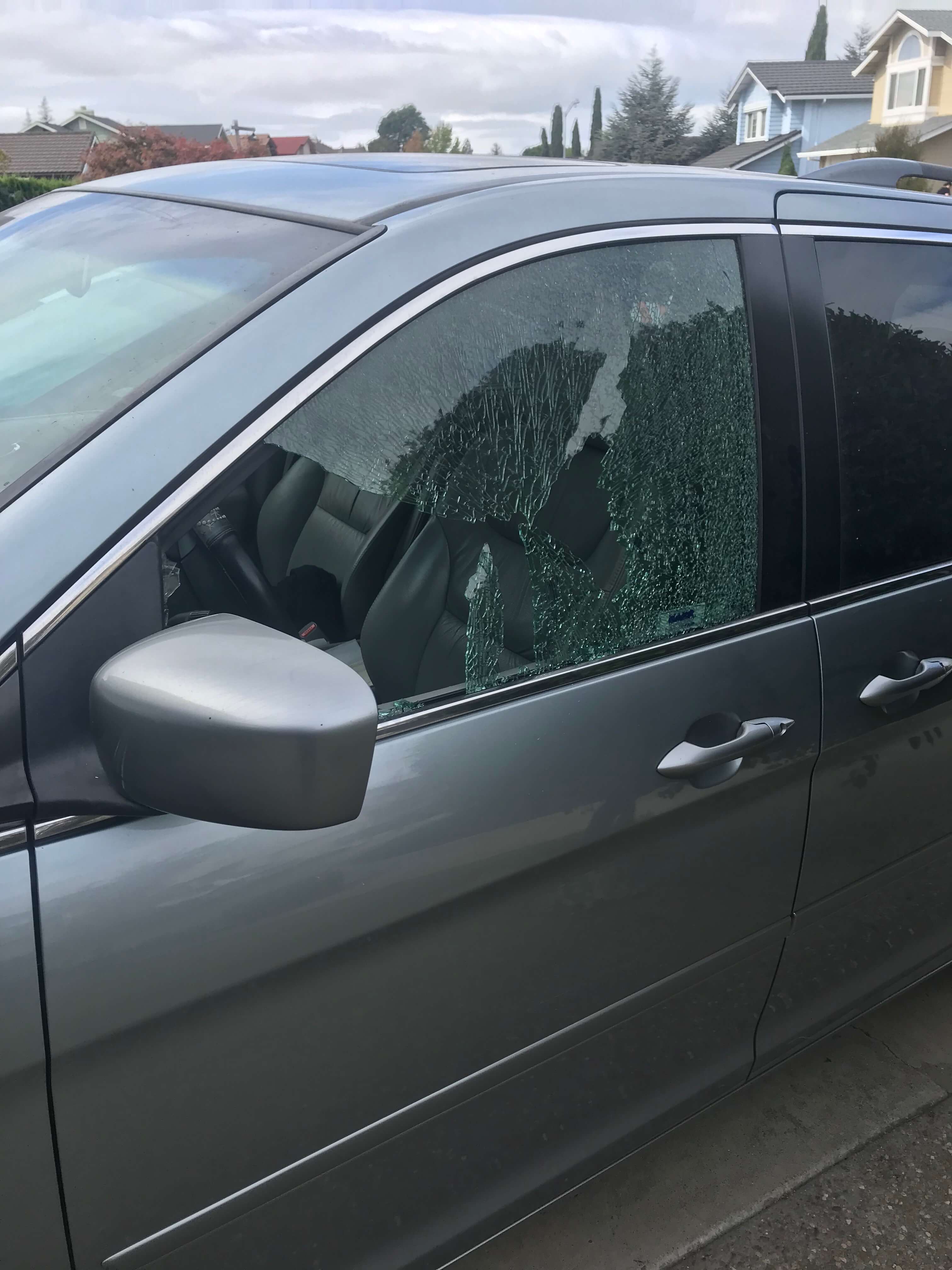
Auto Glass Repair San FranciscoYou see, when car owners in San Francisco need to have their car windows or windshield repaired, be it a simple chip fix or a bigger crack needing professional repair or maybe even a complete windshield replacement, there is a very good chance that they will log on to their computer or check out their smart-phone and do a Google search for “Auto Glass Repair San Francisco” or maybe “Windshield Repair San Francisco” in order to find the best company that can do an affordable job, yet following the strictest safety standards.

And I wanted you to find my website because unlike many of the other sites you will find I do not own my own auto glass repair company. I am actually a regular consumer like you and read so many horror stories about other people just like us who had bad job done that it motivated me enough to create this website and help protect you.

I felt I needed to to so!

Now, I am not going to throw any stone or bash any auto glass repair company or technicians here but I will make a solid recommendation of a few very good glass repair specialists in San Francisco, who are licensed, quality driven and on top of it, friendly, and that you can trust to have your car fixed in no time.

In addition to this, I want to educate car owners on the different types of windows or windshield repairs they may need and give you enough knowledge to confidently to talk to the glass experts, use their own language and more importantly understand what the heck they are talking about when they tell you that you have a bulls-eyes or a combo break on your windshield!

Before I got started in this quest to find look for a qualified auto glass repair specialists in San Francisco I didn’t know how to differentiate a spiderweb crack from a starbreak crack and what type of repairs were needed… I didn’t know how they could fix some fairly large cracks without removing the glass and in just a few minutes… And maybe you don’t either?

No worries! I will cover all of these on this Auto Glass Repair San Francisco site.

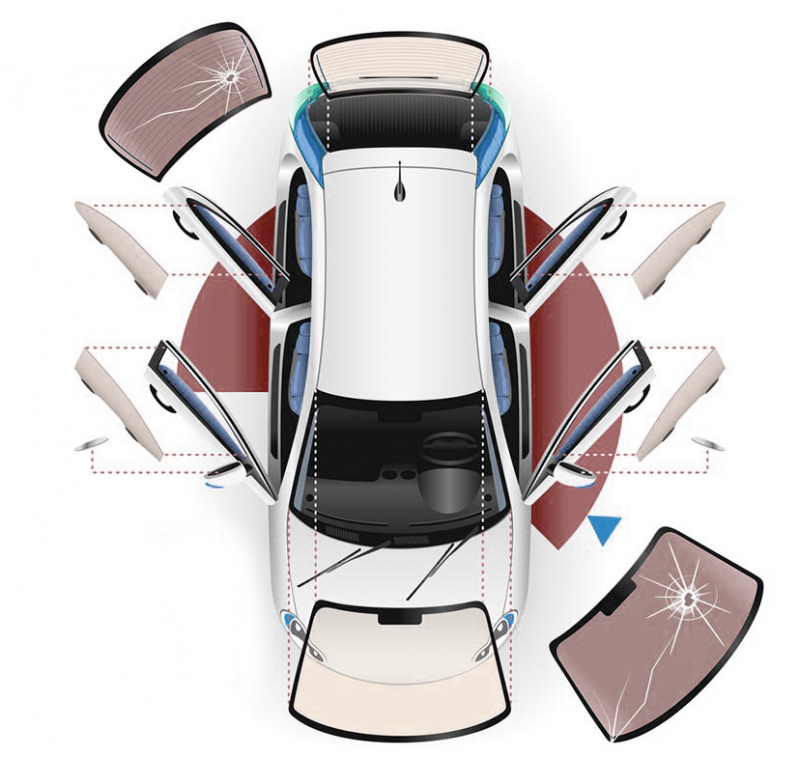
We will look at what constitute laminated glass in modern cars, what types of stone damage you may encounter and why repairing your windows or windshield may be a much better option than just replacing it.

Most importantly, this site will help you hire a San Francisco glass repair specialist that is honest and professional. The last thing you need is to have some unprofessional mechanic messing around with your windshield and putting you and your passengers in danger next time a rock hit your car.

Also, the prices auto glass repair experts charge for various repair work is all over the place. You can get ripped off very easily as most car owners have no ideas how much these repairs should cost and how much their insurance covers. It is just not something we deal with every day…

And one word of warning. You cannot rely on reviews from the Better Business Bureau. Most people don’t know this but the Better Business Bureau is not any type of official government organization like their name implies but they are actually paid by the businesses they represent! Can you say conflict of interest?

Instead, make sure to check if the auto glass repair San Francisco company you want to hire is a member of an official organization such as the NWRA or National Windshield Repair Association. You can also check that they use the best practices described in the ROLAGS which stands for Repair of Laminated Automotive Glass Standard. Do they have insurance on they glass repair services? Do they fill the cracks with the right adhesive resins so your windshield will not shatter after the first hot or cold weather?

I could go on and on but you get the picture. Not all companies are being run according to the same quality standards. Hopefully, after spending a few minutes on my site, Auto Glass Repair San Francisco, you will be able to make an informed decision on who to hire for the job.

Auto Glass Repair San Francisco Tip

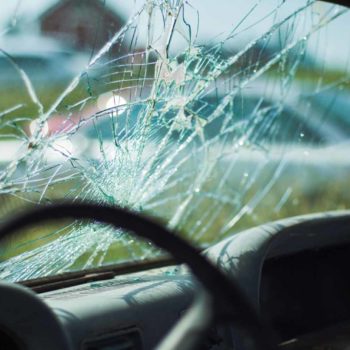
Most of the time, chips and cracks happen when a small rock or other junk from the road top get thrown from other car or truck, most of the time in front of you, and hits your windshield. This will often create either a “chip“, a small damage creating some sort of circular impact area where the rock hit, or a long “crack” which happens mostly when the impact is located on the edge of the windshield.

I found a very helpful article if you want to learn more about the different types of chips and cracks. Good to know when you go see the auto glass repair shop technician!

Why You Need To Fix The Rock Chip On Your Windshield: All About Windshield Repair

By Greg Reindel

You’re out and about running your daily errands and while you’re driving down the road, a nice little pebble decides to skip up from the ground and damage your windshield. Depending on the type and size of the damage, this may be repaired without the need to replace the complete windshield. In some cases, this repair could be performed at no cost to you.

There are different types of windshield damage. The most common damage to windshields is considered to be “rock chips” and cracks. A rock chip is a non-technical term, commonly used by the public, for damage on a windshield caused by road debris i.e., rocks or pebbles. A windshield crack is a single line of separation that may emanate from an impact point. The following will describe the types of rock chips and cracks that can be repaired.

There are four different types of rock chips

  • Bulls-eye or partial bulls-eye rock chips are some of the most common windshield rock chips that can be repaired. They contain damage that is marked by a separated cone in the outer layer of glass that results in a dark circle with an impact point. A “bulls-eye” rock chip can be repaired if the diameter is no larger than one inch.
  • A star chip is another common windshield rock chip that has damage that exhibits a series of legs that emanate from the break. Star chips can be repaired if the chip’s total diameter (including legs) does not to exceed 3 inches.
  • A combination chip is a rock chip that has damage with multiple characteristics. Those characteristics can include a star within a bulls-eye or short or long crack(s) emanating from the damage. This can be repaired if the diameter of the body (excluding legs) does not exceed 2 inches.
  • A surface pit is a nick in the glass associated with normal wear and tear that does not penetrate to the plastic inner layer. This can be repaired if the damaged area has a diameter of not less than 1/8 inch.

There are five different types of windshield cracks

  • A crack that is 6 inches or less is called a “short crack”
  • A “long crack” is a crack that is longer than 6 inches
  • “Edge cracks” are any crack that extends to an edge of the windshield
  • A “floater crack” is any crack that does not extend to an edge of the windshield
  • “Stress cracks” are a crack that extends from an edge and lacks an impact point.

Most windshield cracks can be repaired if the crack is no longer than 12 inches. Stress cracks and edge cracks that intersect more than one edge cannot be repaired.

Now that you know what can and can’t be repaired, there’s one more thing to consider. Time!! Many factors like extreme heat or cold and even your air conditioning cooling down the windshield on a hot day can cause the damage to get worse. The longer you wait to repair the damage, it could spread and may turn a repairable situation into a full blown windshield replacement costing YOU more. Most insurance companies WILL cover a rock chip on the windshield at no cost to you. Speak with your insurance agent to get more information on what they will cover when it comes to windshield damage.

Now you have 3 options. You can pay out of pocket, you can have your insurance company cover the cost, or you can do the repair yourself. The cost out of pocket will vary from $30-$60, depending on the company you chose. Filing with insurance is easy because it is no cost to you, and the auto glass repair company deals with the paperwork. You can also attempt the repair yourself, but if you do not feel comfortable, i would suggest calling a professional. There is a good step by step windshield repair Instructable available, as well as other information online.

How it will look after the repair depends on the technician performing the repair. Most technicians will give you a 60-99% cosmetic improvement, meaning that there will be little to no noticeable damage after the repair is complete. Structurally, all repairs should achieve 100% strength once the products have cured. Ask the technician any questions you have before they start the repair. Also keep in mind that all chips and crack are not repairable.

Now, you should have a better understanding of the benefits of windshield repair as opposed to replacement. Remember to shop around and look for the best price with top quality work. And also remember to speak with your insurance agent about windshield damage coverage. It may cost you little to nothing and you will have your windshield looking good as new.

For more information including frequently asked questions, check out Austin Windshield Repair Shop

Article Source: http://EzineArticles.com/?expert=Greg_Reindel

Great article!

So as you can see, having a windshield repaired instead of being replaced is usually the best solution.

However, finding the best shop to do a great job at a competitive price is another quest by itself! To help you with this, I have compiled a short list of the best auto glass repair shops I could find and I published this list on its dedicated Auto Glass Repair San Francisco page.

I hope this help you avoid hours of research and week of struggles if you pick the wrong shop…

Go check it out on this Auto Glass Repair San Francisco page.

For more information on who to trust, visit our Auto Glass Repair San Francisco About Us page.

A Pillar The part of the car body on the sides of the windshield, that helps support the roof.
After Market See Aftermarket.
Aftermarket A term that refers to any car parts that were not made by the original manufacturer of the part.These may or may not meet the exact specifications of the manufacturer (in the case of windshields, the exact specs are often not available to the creators of aftermarket parts). See also OEM.
Anneal A process of heating glass and then slowly cooling it, which helps relieve internal stress, making the lass less likely to break. Tempered glass is creating using annealing. See also Tempered Glass.
ARG See Auto Replacement Glass.
Auto Replacement Glass Abbreviated ARG. This is the industry term for aftermarket glass.
B Pillar The part of the car body that supports the roof, that appears behind the A Piller. In most cars, this is the between the front and rear doors.
Bull’s Eye Damage to glass caused by a rock (or other object) that is circular, typically with a cone in the outer layer of the glass.
C Pillar This term normally refers to the part of the car body on the sides of the rear windshield, which help support the roof of the car. However, some vehicles have more than 3 pillars on each side, in which case this would refer to the third set.
Chip Damage to glass caused by a rock (or other object) that causes a small piece of glass to come off the windshield.
Combination Break When there are multiple types of breaks in a windshield, such as a chip with cracks coming off of it.
Comprehensive The type of insurance that covers most windshield damage in the United States, such as rocks being thrown up from the street.
Cure The process where an adhesive dries and becomes as strong as it is supposed to be. See also Safe Drive Away Time.
Cure Time See Safe Drive Away Time.
Deductible The amount of money that you have to pay when insurance covers part, but not all, of the cost of a repair or replacement. For example, if you have a $250 deductible, and the cost to replace a windshield is $400, you would pay $250 and the insurance company would pay $150. Note that many insurance companies will waive the deductible if you repair a windshield rather than replace it (so the insurance company would pay the entire cost); if you have that option, and your windshield has never been replaced before, you should take it.
Department of Transportation See DOT.
DOT Short for Department of Transportation. This is the U.S. Government agency that handles transportation of all types. See also NHTSA.
Drive Away Time See Safe Drive Away Time.
Edge Crack A crack that starts within 2″ (5cm) of the edge of the windshield, or reaches the edge of the windshield. It normally forms immediately, and starts at 10-12″ (25-30cm) long.
Estimate The sheet of paper that the repair shop or insurance company gives you that shows the estimated cost of repair. This should be given to you before the work is done. In many states, if non-OEM parts are used, the estimate must state this.
Fast Cure Urethane An adhesive that can be used on windshields that cures quickly, allowing the car to be driven safely sooner. One brand has a safe drive away time of 4 hours if a passenger side airbag is present (45 minutes without one), under ideal conditions. See also Safe Drive Away Time.
Federal Motor Vehicle Safety Standards See FMVSS.
Floater Crack A crack that starts in the middle of the windshield (anywhere that is not within about 2″ (5cm) of the edge of the windshield).
FMVSS Short for Federal Motor Vehicle Safety Standards. These are laws in the United States that cover vehicle safety, including windshields. See also FMVSS 205, FMVSS 212.
FMVSS 205 This is the law in the United States that covers the material that needs to be used for windshields, and requires them to have a marking. See also FMVSS.
FMVSS 212 This is the law in the United States that covers the mounting of windshields. See also FMVSS.
Frit This is the painted black band around the perimeter of the windshield. The adhesive is underneath this band, so the band is able to help protect the adhesive from damage from the sun.
Glazing Another term for glass. Can also refer to installing glass in a frame.
Half Moon Damage to glass caused by a rock (or other object) that is similar to a bull’s eye crack, but not completely circular. Also called Partial Bulls-Eye.
Hardened Glass that undergoes a process to make it more resistant to breaking that regular glass. See also Tempered Glass.
Impact Point The location on the windshield where an object hit it that caused damage. Usually a small piece of glass chips off in this location.
Laminated Glass This is actually two (or more) pieces of glass that are held together with a piece of plastic. If the glass breaks, it usually sticks to the plastic, making it less likely to injure people. The plastic can also help prevent occupants of the vehicle from being thrown out of the car.
Legs A term for short cracks that extend from a pit.
Light Transmittance The amount of light that passes through glass. For most car windows, this is required to be 70% or more.
Like Kind and Quality A term used in many state laws to determine the type of replacement part that is acceptable for an insurance company to use. This means that if a part is not a new OEM part, it must be of the same quality. However, not all states use this term.
Lite Regarding a windshield, this refers to a single layer of glass (as opposed to the whole windshield, which consists of two pieces of glass separated by a layer of plastic).
Long Crack A crack that is over about 6″ (15cm) long, which many windshield repair methods are unable to fix.
National Glass Association See NGA.
National Highway Traffic Safety Administration See NHTSA.
NGA National Glass Association. It is an association of companies involved in glass (automotive and otherwise).
NHTSA Short for National Highway Traffic Safety Administration. This is a subsidiary of the U.S. Department of Transportation, that is responsible for the safety of cars. Among other things, they are responsible for the FMVSS series of laws that cover the safety of vehicles, including windshields.
Nitrile Gloves Special gloves that are able to protect against solvents, urethanes, acids and resins. Installers of car windshields normally wear this type of glove.
OEM Short for Original Equipment Manufacturer. This is a car part that either was made by the manufacturer of the car, or was ordered by the manufacturer of the car. Note that insurance companies in some U.S. states are allowed to use used parts, which should of course not be confused with new OEM parts. See also Aftermarket.
Original Equipment Manufacturer See OEM.
Partial Bulls-Eye See Half Moon.
Pinchweld The part of the frame of the car that the windshield attaches to.
Pit The area where glass is missing, after a rock or other item impacts the car.
Plastic Interlayer The term for the piece of plastic that is between the inner and outer layers of glass on a windshield.
Polyvinyl Butyrate See PVB.
PVB Short for Polyvinyl Butyrate. This is the material that is normally used in the middle of two pieces of glass to form a windshield (or other laminated glass). It is a type of plastic. See also Laminated Glass.
Quarter Glass A term used for triangular passenger or driver windows in a car, that typically cannot be opened, that are usually adjacent to the rectangular part of the window that can be opened.
Resin A clear material that is used to fill in cracks and breaks in a windshield.
Safe Drive Away Time The amount of time that you need to wait after a windshield is replaced before it can safely be driven. This time depends on the adhesive used, and other factors such as humidity. You may also be given two times; one where it is safe to drive the car (meaning that the adhesive is strong enough that the windshield won’t come off while driving), and another when it is safe to be in an accident (meaning that the windshield won’t come off as the result of the adhesive not having full strength yet). It is best, of course, not to drive the car until the adhesive has fully cured. See also Cure.
Safety Glass Glass that is manufactured in a way to make it safer than normal glass. This usually involves either making the glass harder (making it more difficult to break, and when broken, the pieces are less sharp), or by laminating it. See also Laminated Glass, Tempered Glass.
Salvage Part A used part that is obtained from a vehicle that is no longer functional (such as one that has been in an accident, flood, or otherwise would cost too much to fix). In many states, it is legal for insurance companies to use used parts.
Shaded Glass Glass where only part of it is tinted. For example, the top of most windshields is tinted to help improve visibility.
Short Crack This term typically refers to a crack that is short enough to be repaired by the more common windshield repair methods, which is about 6 inches (15cm) or less.
Star Break Multiple small cracks coming out from the point where a rock or other item hit the windshield.
Stone Break A small chip that occurs when a stone (or other hard item) hits the windshield. It can then become a large crack over time.
Stress Crack A crack that occurs without anything hitting the windshield, typically due to a large variation in the temperature (such as when the car is sitting in the sun, and then you start it and use the air conditioning). It almost always starts at the edge of the windshield. Stress cracks will normally be a straight (or slightly bending) line, and will not have any sign of impact. A “pen test” is often used to determine if there is a stress crack — a ballpoint pen is run along the crack, and if it dips anywhere, it is not a stress crack. That is because with a stress crack, no glass actually comes off the windshield.
Tempered Glass A type of glass that is stronger than normal, and designed to shatter into small pieces (rather than large, sharp pieces) if broken. Tempered glass is made by heating it and then quickly cooling it.
Tinted Glass Glass that blocks a noticeable amount of light. This reduces glare, and helps absorb heat. However, federal U.S. and many local laws require a certain amount of visibility. See also Light Transmittance.
Urethane An adhesive material that is used to bond a windshield to the car.
Windshield The glass that is used on the front of a car. It is made of laminated glass, and helps support the weight of the car in the event of an accident.
Wiper Sweep The area of the windshield that windshield wipers clean.

Source: http://www.carwindshields.info/glossary.htm

For more information on who to trust, visit our Auto Glass Repair San Francisco About Us page.

Next Page »